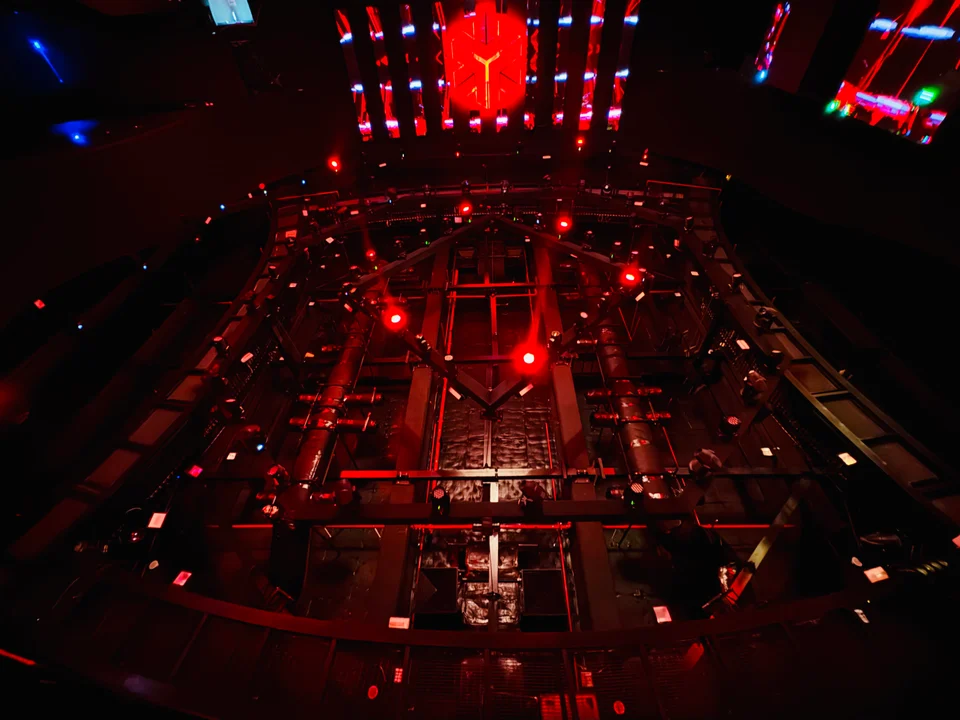
5 min readDJ booth at WHITE Abu Dhabi, shown for illustration. Photo: RaveDubai.
The small word beside the artist’s name
You know the artist’s records. You’ve sent a track to the group chat. Then someone notices the booking says “DJ set”, while the video you’ve been watching shows a keyboard, a saxophone and a stage full of equipment. You may be looking at two different ways of hearing the same person.
That distinction deserves a place in the club-versus-rave conversation. A conventional club can book a live electronic act. An outdoor festival can programme DJs for most of the evening. The building, crowd size and amount of lighting don’t tell you which kind of performance you’re buying.
Start with the wording attached to that specific appearance. “Live” after an artist’s name can be a useful format label. “Live in Dubai” in a headline may simply announce that the artist is appearing in person. If the difference matters to you, read the description or ask the promoter what the booking involves.
What changes between a DJ set and a live set?
In a DJ set, the artist selects and mixes recordings. The work includes choosing the next track, deciding when to bring it in and shaping how one piece meets another. Those recordings can include the DJ’s own productions, other artists’ music, edits and unreleased material. A producer playing a DJ set isn’t promising a run through their own album.
A live electronic performance can involve playing instruments, triggering parts, changing sequences or rebuilding arrangements from prepared material. It needn’t mean a full band, and it doesn’t mean every sound is being created from scratch. A laptop can sit at the centre of a live setup. A keyboard onstage doesn’t, by itself, explain how the whole performance works.
There are hybrid arrangements too. Someone might mix tracks while adding percussion or another instrument. Rather than trying to award points for how much equipment is visible, listen for what the performer does with it. Does a melody return in a different form? Does a rhythm change underneath it? Is the interest in the individual song, or in the way several tracks fit together?
A Dubai bill that spelled out the difference
Groove on the Grass’s 12th-anniversary listing is a useful historical example. For its 19 October 2024 event at Emirates Golf Club, the ticket page explicitly billed ASH as a live act. The same page separated the Main Stage from the Groove Arena and listed other artists across the two programmes. That was information about the performance, not just a decorative word on a poster. Archived Groove on the Grass ticket listing
Mixmag MENA’s announcement, published on 3 October 2024, independently described ASH’s booking as a live performance. It also reported a back-to-back appearance by Jamiie and Fiona Kraft. A back-to-back billing tells you artists are sharing a set; it doesn’t turn the booking into a live instrumental show. Mixmag MENA’s October 2024 announcement
These are archived examples, not upcoming recommendations. They show how much a flyer can tell you when you read the smaller labels. They also show why it’s worth checking the event page against the artist’s own channels. You want information about this appearance, not a format borrowed from a different tour.
Follow the artist across places, not assumptions
ASH’s own biography describes him as a Cairo-born, Montréal-based multi-instrumentalist, producer and composer. It identifies piano, guitar, saxophone and percussion among the ingredients in his music. That helps explain why a live billing carries useful information for someone who knows only his recordings.
His biography also documents a performance at the Great Pyramids of Giza in 2019 and a headline return there in 2024. Those Egyptian appearances and the Dubai festival booking give you different settings in which to explore the artist’s work. They don’t establish that every show used the same equipment, arrangements or set length. ASH’s official biography
If a filmed performance in Giza is what caught your attention, check whether the Dubai booking you’re considering is advertised in the same format. An artist’s connection to Egypt doesn’t make every Egyptian event alike, any more than a Dubai address makes every booking a nightclub set. Follow the actual performance details.
Use an artist’s official performance video as a listening sample, not a guarantee. A short promotional edit can show a dramatic moment while leaving out the quieter passages. If there’s a longer recording from the relevant tour or format, give it enough time to hear how the music develops.
Lighting at WHITE Abu Dhabi. Photo: RaveDubai.
Choose what you want to hear
If you love an artist’s own compositions, a live show may be the booking you want to investigate first. Still check the tour description: a new project can sound different from the album you’ve had on repeat. If you’re curious about the artist’s wider taste, a DJ set can introduce you to music you wouldn’t find by searching their releases alone.
Before buying, find the format label, read any description of the setup and check the published set times when they become available. Don’t assume a headline name means a longer performance. If the format remains unclear, ask one plain question: is this a DJ set, a live electronic performance or a hybrid?
Then choose on the strength of what you want from the music. Some nights you want to hear familiar compositions taken apart and played differently. Other nights you want someone to connect records you’ve never heard. Neither preference needs defending. It just helps to know which ticket you’re holding.